How Many Tiles in a Mahjong Set? 136, 144, 148, 152 & 144+8, Explained
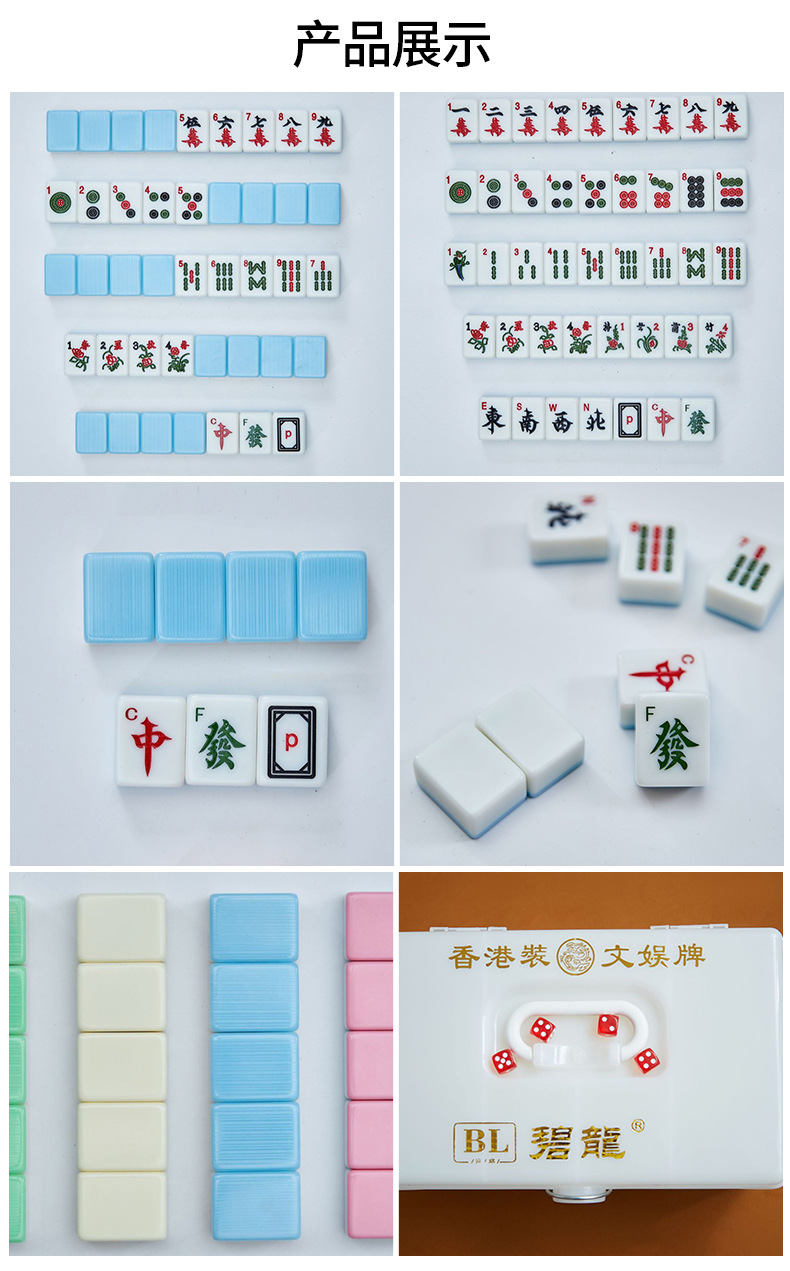
Line up two mahjong sets side by side and the first thing that jumps out is the count: 136 tiles here, 152 there — and a Vietnamese set that ships as 144 "plus" 8. It looks arbitrary, but it isn't. The tile count is decided by the rule system, not the factory. Every major tradition carries its own number, and that number is the fastest clue to which game a set was built for. This guide breaks down each standard count — what's inside, how to read a set by its count, and how buyers can use this knowledge to avoid the most common (and most expensive) ordering mistakes.
One table to see all five
Five rule systems, five counts. Memorize this table and you can identify almost any set at a glance:
| Rule system | Tiles | Where it's played | What makes it different |
|---|---|---|---|
| Hong Kong / Cantonese | 136 | Hong Kong, Guangdong, most overseas Chinese communities | Flower tiles are not used in play (or set aside) — the leanest traditional configuration |
| Chinese classic (national standard) | 144 | Mainland China, international Chinese-rules tournaments | Includes all flower & season tiles |
| Singapore & Malaysia | 148 | Singapore, Malaysia, parts of Thailand | 144 + 4 animal tiles (cat, rat, rooster, centipede) |
| American Mahjong | 152 | United States | Adds 8 jokers + 8 numbered flower/season tiles; played against the yearly card |
| Vietnamese | 144 + 8 | Vietnam | 144 base tiles + 8 "god" wild tiles locally called tướng (the boss) |
Keep this table in mind and you can read almost any set on sight. Below, each count in turn.
136 tiles: Hong Kong mahjong
136 is the classic South-China configuration: 108 suit tiles (36 dots, 36 bamboos, 36 characters), 16 winds and 12 dragons. Flower and season tiles are left out of play — Hong Kong rules don't use them.
Because it's the leanest configuration, it's also the cheapest to produce, and it's the most common set in overseas Chinese communities from San Francisco to London. If a buyer asks for "regular mahjong" without saying anything more, this is often what they mean — but always confirm it, because "regular" means different things on different continents.
144 tiles: Chinese classic (national standard) mahjong
Add the 8 flower and season tiles to the 136 core and you get the 144-tile Chinese classic configuration — the version played across mainland China and in international Chinese-rules tournaments. Flowers are drawn, exposed and scored, adding a layer of luck that many players enjoy.
This is the count most Chinese families grew up with, and the default for gift-boxed sets sold around Lunar New Year. For B2B buyers serving markets with large Chinese communities, 144 is usually the safest first order.
148 tiles: Singapore & Malaysia mahjong
Southeast Asian players add four animal tiles to the 144-tile Chinese set: cat, rat, rooster and centipede. Land on your "natural enemy" combination on the table and the win or loss doubles. That's the 148.
Animal tiles are the signature of the Singapore-Malaysia game, and local players care about them. Selling a 144-tile set into Singapore or Malaysia isn't a discount — it's the wrong product. Sets for this market should also use the larger sizes local players prefer (38–44 mm), often with Arabic numerals on the suits so number-reading players can read them clearly.
152 tiles: American mahjong
American play reassembles the set for a completely different game. Starting from the 144-tile Chinese classic, it swaps the plain flowers and seasons for 8 numbered flower/season tiles (two families, numbered 1–8), then adds 8 jokers — wild tiles that can stand in for any tile in a pung or kong. That makes 152.
American mahjong is also the only mainstream version played against an official yearly hand card, which is exactly why American tiles print their dots and bamboos in red and blue numerals: the colors correspond to the card. We have a full dedicated guide to American rules.
144+8 tiles: Vietnamese mahjong
Vietnam keeps the standard 144, then adds 8 "god" tiles — wild cards locally known as tướng (the boss). Depending on the variant, these can include four Kings and four Queens with extremely broad replacement power, which makes Vietnamese mahjong noticeably wilder and faster than its neighbors.
The 144+8 configuration is almost never seen outside Vietnam and is only available from specialist suppliers. If a buyer asks for it by name, you can be nearly certain they know exactly what they want — a strong signal of a real Vietnamese-market project.
160, 166 and other "over-counts": where spare tiles come from
Many sets ship with more tiles than the game strictly needs. That's not an error: factories add spare tiles so that one lost or damaged tile doesn't ruin the whole set. A set labeled 166 is usually the 152-tile play configuration plus spare tiles — and the same logic applies to other over-counts.
Here's the buyer trap: some product pages list the shipped count (160/166), others list the play count (152). Neither is wrong, but comparing the two creates a false sense of value — and occasionally real disappointment, when a set arrives and seems to be "missing tiles" that were never part of the configuration. Before you order, ask exactly which number is in the quote, and what it's composed of.
Why this matters for buyers: four specs, confirmed in writing
On the production side, tile count is one of four specs that must be confirmed in writing before a single tile is made — because if this one is wrong, the whole batch is wrong:
- Rule system — which game is this set for?
- Tile count — the play count, and the shipped count including spares (state both separately).
- Size — height × width × thickness. One number isn't enough; thickness decides whether the tiles fit a standard rack.
- Back color — the most common production error in this category.
A buyer who opens with these four lines gets an accurate quote faster, avoids rework costs, and — frankly — gets taken more seriously by any factory. Saying just "mahjong, 144 tiles" can still deliver the wrong goods, because 144 alone doesn't tell you which flower system, which numbering, or which back color.
Before you order: a four-question checklist
- Who plays this set, and in which country?
- Does the game use flowers, animal tiles or jokers?
- Do the players need to read Arabic numerals on the tile faces?
- What rack size must the tiles fit?
Four answers, one correct set.
The takeaway
Tile counts look arbitrary until you realize each number maps to a way of playing: 136 Hong Kong, 144 Chinese classic, 148 Singapore & Malaysia with animals, 152 American with jokers, 144+8 Vietnamese with god tiles. Anything beyond those numbers is spare tiles. Identify the rule system first, confirm the four specs in writing, and everything else falls into place.
Sourcing for a specific rule system?
We produce all major rule systems — 136 Hong Kong, 144 Chinese classic, 148 Singapore & Malaysia, 152 American, 144+8 Vietnamese — plus Arabic-numeral Chinese sets for Middle East and Southeast Asian markets, in melamine or acrylic, fully customizable. Tell us the rule system and your target market, and we'll quote accordingly.
Request a Quote →